Perfume Prices in Sri Lanka: Where the Money Actually Goes
A bottle that costs one price in Dubai costs considerably more here, and the difference is not markup. Here is what stacks onto an imported fragrance before it reaches you.
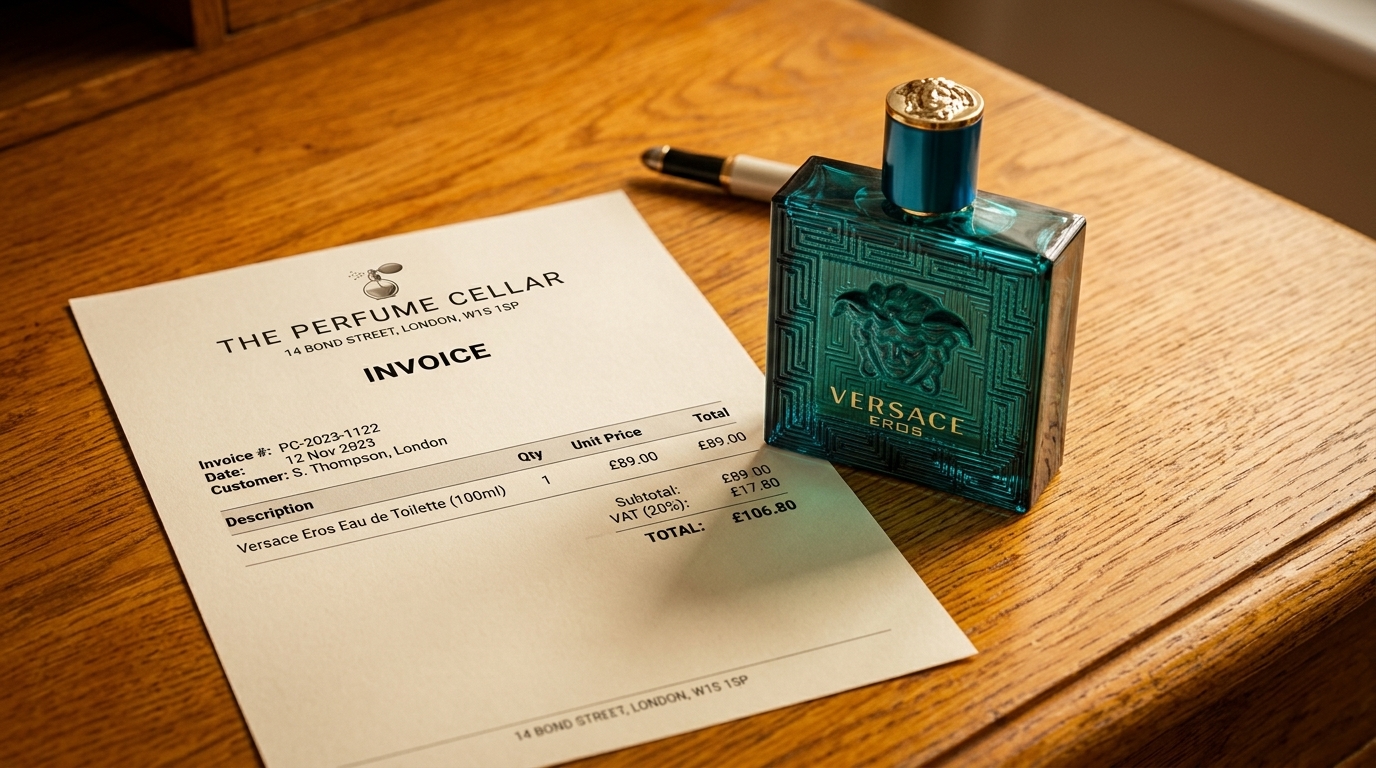
The liquid in a perfume bottle is usually the smallest line in what you pay for it. In Sri Lanka that is more true than almost anywhere else, because an imported fragrance picks up several separate charges between the factory and the shelf.
This is not the same as saying perfume is overpriced here. It is saying the price you see is built from parts. Knowing those parts tells you when a price is normal, when it is high, and when it is low enough to worry about.
Key Takeaways
- An imported bottle carries customs duty, VAT and further levies, each calculated separately, before any seller adds margin.
- The same fragrance is cheaper in Dubai because airport retail sits outside the import system you are paying for here.
- Gulf-house fragrances cost less mainly because no licensing fee is built into them, not because the contents are cheaper.
- Prices move with the exchange rate and duty changes, so any figure you read has a shelf life.
- A price far below every other seller is a warning, not a bargain.
If you are trying to decide what to buy rather than understand what you are paying, start with our guide to choosing a perfume in Sri Lanka instead.
What stacks onto an imported bottle
A fragrance arriving in Sri Lanka passes through several charges, and they are applied in sequence rather than as one figure.
Perfumes sit under HS heading 3303 in the Sri Lanka Customs national import tariff. Goods in that chapter attract customs duty, VAT, the Ports and Airports Levy, and in places a CESS charge levied by weight rather than value. Each is calculated on its own basis, so they compound rather than simply adding up.
On top of that sit costs that have nothing to do with tax:
- Freight and insurance to get the shipment here, plus clearing charges at the port.
- The distributor's margin, if the brand sells through an authorised local distributor rather than direct.
- The retailer's margin, which has to cover stock sitting on a shelf in a market where a single bottle can take months to sell.
- Breakage and returns, which are a real cost with glass shipped across an ocean.
We are not going to print duty percentages here, because they change and a stale figure is worse than none. If you want the current rate for a specific product, the tariff is published and searchable at the link above.
Why the same bottle is cheaper in Dubai
This is the comparison most buyers make, and the gap is real. It is also mostly not about greed.
Airport and duty-free retail sits outside the import chain described above. There is no landed cost, no local distributor and frequently no duty at all. You are comparing a bottle that has been through a customs process against one that has skipped it.
The Gulf also buys at a different scale. It is one of the largest fragrance markets in the world, and the houses that supply it ship there in volumes that make freight per bottle a rounding error. Sri Lanka is a small market a long way from most manufacturing.
None of that makes buying abroad automatically smarter, which is worth working through properly.
Is it worth buying abroad instead?
Sometimes on the sticker price. Rarely once you count everything.
If you are travelling anyway and buying within your allowance, a duty-free bottle is usually cheaper. Sri Lanka Customs allows arriving passengers a personal allowance covering up to 250ml of eau de toilette and a small quantity of perfume, alongside a general limit on personal goods. Those concessions are granted once in any 365-day period (Sri Lanka Customs, travellers information). Check the current limits before you rely on them.
Ordering from an overseas website is a different calculation. The listed price excludes shipping, and the parcel is still an import, so it can attract the same charges on arrival. You also lose any practical route to a refund if the bottle is wrong, damaged or not what was advertised.
Compare the landed cost, not the listed one. That means price plus shipping plus whatever the parcel attracts on entry, set against a local price that already includes all of it and comes with someone you can contact.
Why Gulf houses cost less than designer names
The price gap between a Lattafa or Afnan bottle and a European designer release is large, and it is the single most common thing buyers ask us to explain.
It is not that the contents are cheaper. Gulf houses sell under their own names, so no fashion brand is being paid a licensing fee out of your money. They spend far less on advertising, and they ship from much closer. A larger share of the price is the liquid.
The full breakdown of what a designer premium actually buys is in our post on EDT, EDP and Parfum.
Why prices move
A price you saw three months ago is not a price you can hold anyone to, and there are four reasons for that.
The exchange rate. Stock is bought in dollars or euros. When the rupee moves, the cost of the next shipment moves with it, even though the bottle is identical.
Duty and tax changes. Rates are revised, and a revision applies to stock cleared afterwards rather than to what is already on the shelf. This is why two sellers can hold the same product at genuinely different prices without either being dishonest.
Batch and stock age. Older stock bought at a better rate can be sold for less. That is a legitimate discount rather than a red flag.
Reformulation and size changes. Houses change formulations and occasionally sizes. A cheaper listing is sometimes a different product wearing a familiar name.
What a fair price looks like
Rather than memorising numbers, compare across three or four sellers before buying, including at least one you already trust. You are looking for the shape of the market rather than the lowest figure in it.
Then convert to price per millilitre, because it is the only way to compare a 50ml against a 100ml honestly. Divide the price by the volume and compare those figures instead of the sticker prices.
A moderate spread between sellers is normal and reflects when each one cleared their stock. What is not normal is a designer bottle at a fraction of everyone else's price. That gap has to come from somewhere, and the usual answers are that it is counterfeit, a tester sold as retail, or a bottle that is not what the listing says.
The checks worth running before you pay are in our guide to spotting a fake without guessing.
Getting more out of what you spend
Two things change the value of a purchase more than shopping around does.
The first is buying a concentration that suits the climate. An EDP costs more than an EDT of the same fragrance and lasts considerably longer here, which usually makes it the cheaper option per hour worn.
The second is storage. Heat and humidity degrade perfume oils, and a bottle kept in a bathroom loses quality within months. That is money evaporating in the most literal sense, and our guide to making fragrance last in this climate covers how to avoid it.
Common questions
Why is perfume so expensive in Sri Lanka?
Because an imported bottle carries customs duty, VAT and further levies before anyone adds margin. The market is also small, so freight and slow stock turnover are spread across few sales. The bottle itself is a minor part of the total.
Are cheaper perfumes lower quality?
Not reliably. Price reflects licensing, marketing, packaging and import costs at least as much as materials. Several long-lasting fragrances sold here are among the cheaper options precisely because no licensing fee is built into them.
Do prices differ between shops for the same bottle?
Yes, and a moderate difference is normal. It usually reflects when each seller cleared their stock and at what exchange rate. A very large gap is worth investigating rather than acting on.
Is a discounted perfume a warning sign?
Not on its own. Older stock, discontinued packaging and end-of-line sizes are all genuinely cheaper. The question is how far below the market it sits, not whether it is below at all.
Will prices come down?
They track the rupee and the tariff rather than anything about fragrance. Neither is predictable, so buying now versus waiting is not a decision anyone can make well on price alone.
The short version
You are paying for a bottle plus an import process, and the import process is the larger half. That is why a Dubai price is not a useful comparison. It is also why Gulf houses undercut designer names without being lesser products, and why the same bottle costs different amounts at different shops in Colombo.
Compare a few sellers, work in price per millilitre, and treat a price far below the rest as a question rather than a win. Current prices for everything we carry are on each product page, and you are welcome to ask us what a fair range looks like for something you have seen elsewhere.
See our fragrance guides first in your Google results.
Mentioned in this guide